When designing a swimming pool, many people focus on color and visual appearance, but overlook one crucial aspect: the water absorption rate. This figure is a key indicator of a material’s durability in areas that are constantly in contact with water. Stones with high absorption rates tend to crack, stain, and even mold more easily, especially when used in submerged areas or splash zones.
Technically, the water absorption rate indicates how much water can penetrate the pores of the material, the lower the percentage, the denser the material’s structure. For swimming pools, ideal materials generally have a figure below 0.5%. Even very dense natural stones like granite can have a water absorption rate of 0.1% or lower, making them highly stable for long-term use.
Primary Water Absorption Rates by Material (ASTM C97)
Testing standards such as ASTM C97 are often used as a reference to determine a stone’s water performance. Here’s a general overview of absorption levels based on material type:
- Engineered Stone/Sintered Stone: <0.05% (virtually non-porous)
- Porcelain: <0.5% (highly waterproof, suitable for pool interiors)
- Granite: 0.1% – 0.4% (dense and durable structure)
- Slate: <0.4%
- Marble: 0.2% – 2.0% (requires additional protection)
- Limestone/Travertine: 1.0% – 10%+ (large pores, must be sealed)
- Sandstone: 0.3% – 12%
From this list, it’s clear that not all natural stones perform equally when exposed to water continuously. Materials with a reading below 0.5% are recommended for permanently wet areas.
However, this doesn’t mean stones with higher absorption rates can’t be used. The key lies in proper treatment and installation systems.
Key Considerations for Choosing Swimming Pool Stone
Waterproof vs. Porous
Pool areas, especially the interior, which is constantly submerged, require materials with a dense structure. Stone or tile with a low absorption rate helps prevent water infiltration, which can weaken the structure from within.
Porous materials offer a warm and exotic natural look. However, without additional protection, water will more easily seep in, carrying dirt particles, and causing permanent stains. Therefore, choosing waterproof stone is the safest preventative measure.
Freeze-Thaw Resistance
In cold climates, freezing poses a serious challenge, the water that goes to the pores of the stone freezes when the temperature drops. When it freezes, its volume expands and exerts pressure from within. This process repeats every winter and can cause cracking or peeling.
Therefore, materials with low absorption are much more resistant to freeze-thaw cycles. Despite Indonesia’s tropical climate, this principle remains relevant for projects in highlands or areas with extreme temperature fluctuations.
Stain and Fungus Resistance
Swimming pools are humid environments ideal for the growth of moss and algae. Stone with large pores will more easily absorb water carrying microorganisms and dirt particles. In contrast, granite or porcelain with very small pores tends to resist water penetration. This helps maintain a clean color, minimizes stains, and reduces the risk of mold growth. The impact is not only aesthetic but also ease of long-term maintenance.
Natural Stone Maintenance
Natural stone such as travertine or limestone remains a favorite due to its elegant and natural visual character. Although its absorption rate can reach 2.5–10%, its performance can be improved through regular sealing.
With a high-quality sealant, the absorption rate can be reduced to nearly 1%. This makes it more competitive than other waterproof materials. However, regular maintenance is mandatory for optimal protection.
Neglecting the sealing process will accelerate the appearance of stains, discoloration, and even damage to the surface structure.
Impact on Installation
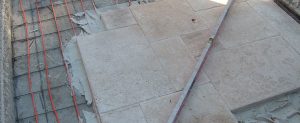
Highly absorbent materials require extra attention during installation. In addition to the sealant used, the type of adhesive also plays a role. In some cases, epoxy-based mortar is recommended to prevent water from seeping under the stone and causing delaminating.
Mistakes in selecting an installation system are often the main cause of swimming pool project failure. It’s not the material itself that’s at fault, but rather the application method that doesn’t suit the characteristics of the stone.
Therefore, material selection should always be accompanied by thorough technical consultation.
Recommended Materials for Swimming Pool Areas
Interior (Submerged) Pools
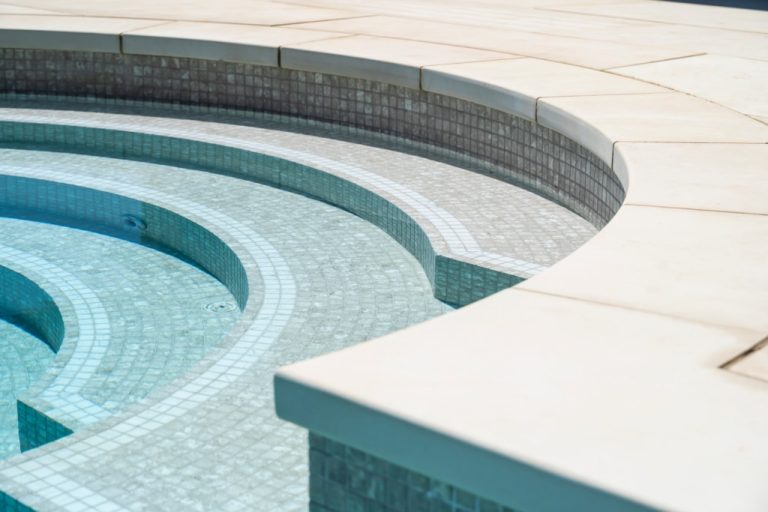
For the interior of a pool that is constantly filled with water, the safest materials are porcelain, glass tile, or high-density natural stone such as granite. Their dense structure minimizes the risk of long-term damage and maintains a consistent appearance.
Pool Deck or Edge
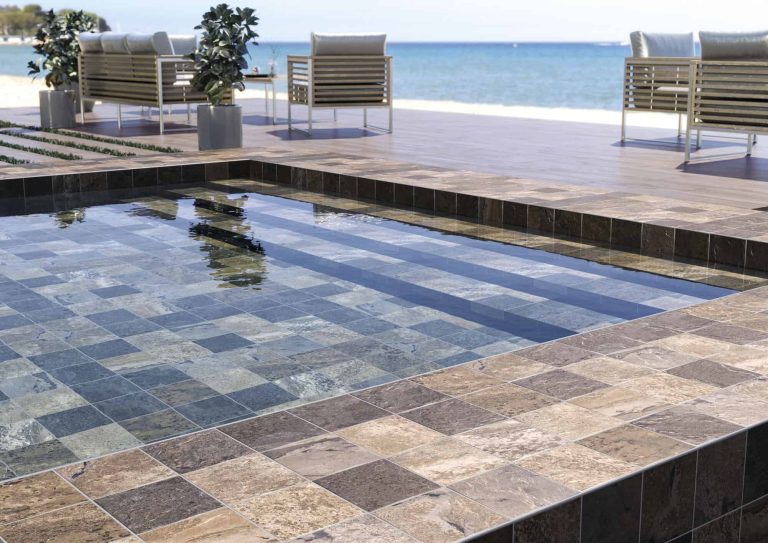
The area surrounding the pool requires a combination of durability and safety. Textured porcelain with an R11 or R12 anti-slip rating is a popular choice because it doesn’t slip when wet. Another alternative is flamed granite, which has a naturally rough surface.
Properly sealed travertine can also be an attractive option for creating a warm, resort-like feel.
Green Sukabumi Stone
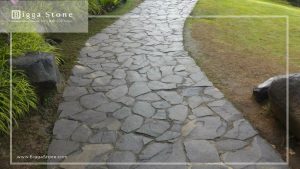
One natural material widely used for tropical pools is Green Sukabumi Stone. This stone is known for its relatively low water absorption compared to many other natural stones and provides a natural green color that enhances pool water.
Why Is Understanding Absorption Important?
Choosing pool stone isn’t just a matter of design. It’s about durability, safety, and long-term cost-efficiency. Materials with the right specifications will reduce the risk of cracking, staining, and excessive maintenance.
If you’re planning a swimming pool project, whether for a private residence, villa, or resort, be sure to look not only at color samples but also at technical specifications.
To get pool stone materials with proven quality and a comprehensive selection, you can consult directly with Bali Stone Tiles. Their professional team is ready to help you choose the best stone for your design needs and the environmental conditions of your project. Contact Bali Stone Tiles now and create a swimming pool that is both durable and visually stunning.
Frequently Asked Questions
Why is the water absorption rate important for pool stone?
Because the absorption rate determines how much water penetrates the stone, the lower the number, the lower and the risk of cracking, staining, and mold growth.
Are all natural stones suitable for swimming pools?
Large-porous stones like limestone or sandstone require regular sealing to remain safe for use in wet areas.
How often should pool stone be resealed?
It is depending on the type of stone and water exposure, generally every 1–2 years to maintain optimal protection.
Is Green Sukabumi Stone better than porcelain?
Both have their advantages. Sukabumi Stone offers a natural, tropical aesthetic, while porcelain excels in consistency and a very low water resistance.