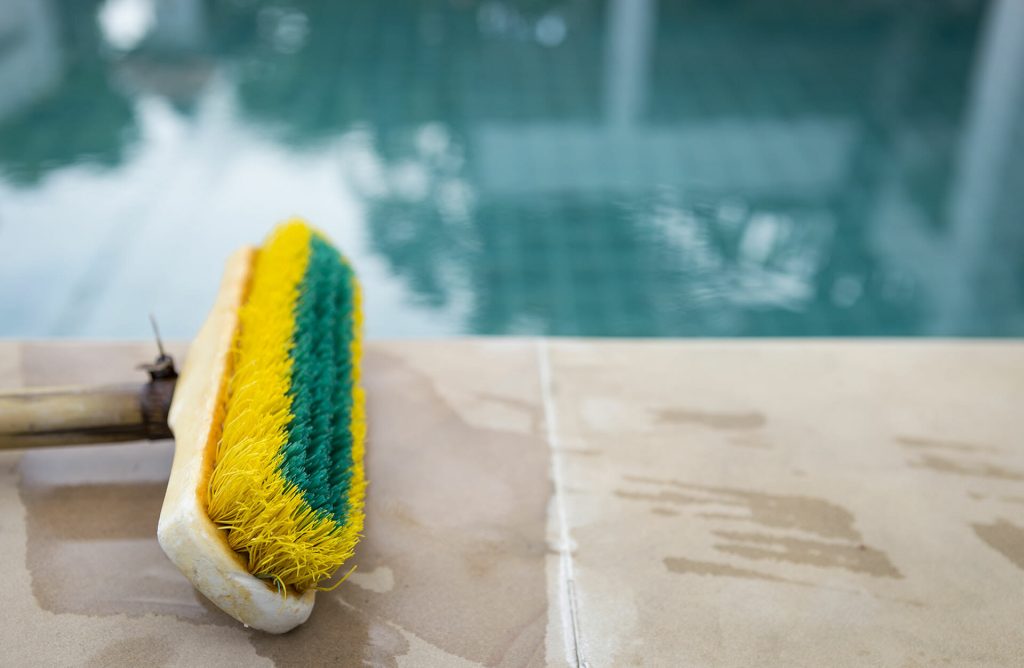
A clear swimming pool is certainly pleasing to the eye. However, over time, grayish-white lines often appear along the water’s surface. These deposits are caused by minerals, especially calcium, which harden and adhere to the tiles. If left untreated, these deposits are not only aesthetically pleasing but can also damage the tile’s appearance in the long term.
Removing calcium scale doesn’t have to be complicated. With the right technique and the right materials, tile surfaces can be clean again without needing replacement. Here’s a comprehensive guide, reorganized in a more systematic and easy-to-understand format.
General Cleaning Methods
Before choosing a cleaning method, it’s important to determine the severity of the deposits. Is it still thin and light, or has it thickened and hardened? Treatments will vary.
Vinegar Solution (Best for Light Deposits)
For newly formed, thin deposits, a vinegar solution can be a practical and economical solution. Mix white vinegar with clean water in a 1:1 ratio and pour it into a spray bottle.
The application process is quite simple:
- Spray the solution directly onto the tile that is affected.
- Let it sit for about 10–15 minutes to allow the natural acid in the vinegar to soften the minerals.
- Then, scrub gently with a sponge or you can also use soft-bristled brush.
This method is effective for cleaning waterlines that are starting to look dull. However, always test it on a small area first to ensure there is no adverse reaction on the tile surface.
Pumice Stone (Best for Stubborn Stains)
If the scale is thicker and difficult to remove with regular cleaning fluids, a pumice stone can be an alternative. Use a damp pumice stone to make it less abrasive.
- Gently rub it over the problem area.
- Avoid applying too much pressure, as it can leave scratches.
- Keep in mind that this method is only safe for ceramic or porcelain tiles.
- Avoid using on glass tiles or polished surfaces, as it can damage the finish.
This technique is quite effective for hardened deposits, especially in areas of the waterline that are frequently exposed to sunlight.
Baking Soda Paste
For those who want a mildly abrasive option, baking soda can be an option.
- Stir baking soda with a little water to make it like a thick paste.
- Apply the paste to the limescale, and then gently scrub it with a sponge.
- Baking soda acts as a natural cleaning agent with mild abrasive properties, making it relatively safe for most types of pool tiles.
This method is suitable for routine maintenance to prevent the limescale from thickening.
Muriatic Acid (For Severe and Crystallized Limescale)
When limescale is very thick and hard, a stronger agent is needed. One such agent is hydrochloric acid, often called muriatic acid.
It must be used with extreme caution:
- Dilute the acid according to the instructions.
- Apply it to the limescale using an applicator tool.
- Use a scraper to help loosen the limescale.
Because it is highly corrosive, be sure to wear rubber gloves, a mask, and protective eyewear. Avoid direct contact with skin and do not mix it with other chemicals. This method is usually a last resort due to the high risk and danger if not handled properly.
Professional Cleaning (Media Spraying)
For truly severe conditions, especially in pools that have not been maintained for a long time, hiring a professional may be the best option. Technicians typically use a low-pressure spraying technique. A material such as kieserite or glass beads is sprayed with compressed air to remove the scale without damaging the tiles.
Advantages of this method:
- Faster and more efficient.
- Less risk of tile damage.
- More even and maximally clean results.
While more expensive than DIY cleaning, this method is very effective in restoring a pool’s appearance to a new look.
Preventive Maintenance
Cleaning is important, but prevention is even better. With regular maintenance, calcium deposits can be minimized.
Balancing Water Chemistry
The key to preventing scale buildup is maintaining the balance of your pool water. Check and adjust:
- pH Level
- Alkalinity
- Calcium Hardness
If mineral levels are too high, the risk of scale formation increases. Check your water regularly using a pool test kit. Balanced water not only prevents scale buildup but also ensures a comfortable swimming experience.
Routine Cleaning
Don’t wait for scale to thicken. Make a habit of brushing the waterline at least once a week with a soft brush. Consistent light maintenance is much easier than removing hardened scale.
Also, pay attention to your pool’s circulation and filtration system. Good water flow will reduce mineral buildup in certain areas.
Safety Tips When Cleaning
Whichever method you choose, always prioritize safety:
- Wear protective gloves.
- Wear safety glasses when using chemicals.
- Do not mix cleaning agents randomly.
- Do a test on a small area before cleaning the entire surface.
- Rub with light pressure to prevent permanent scratches.
This simple step can prevent tile damage and injury.
Choose Quality Tile Materials from the Start
Besides maintenance, the quality of the tile material also plays a major role in its resistance to limescale and stains. Tiles with a good finish and density tend to be more resistant to mineral absorption. If you’re building or renovating a swimming pool, choosing a quality product will reduce future maintenance costs.
For elegant and durable natural stone tiles, consider products from Bali Stone Tiles. The right material not only enhances your pool’s beauty but also simplifies long-term maintenance. Want a cleaner, more elegant, and more limescale-resistant pool? Visit Bali Stone Tiles now and discover the best natural stone tile collection for your project.
Frequently Asked Questions
Is vinegar safe for all types of pool tiles?
Vinegar is safe for most ceramic and porcelain tiles, but it’s best to avoid using it on certain natural stones as it can damage the surface.
How often should calcium limescale be removed?
Perform a light cleaning weekly and a thorough inspection monthly to prevent hardening.
Can muriatic acid damage tiles?
If used excessively or without proper dilution. Always follow instructions and wear personal protective equipment.
When should you seek professional help?
If the scale is very thick, crystallized, or if self-cleaning doesn’t produce optimal results, professional help is the best option.